
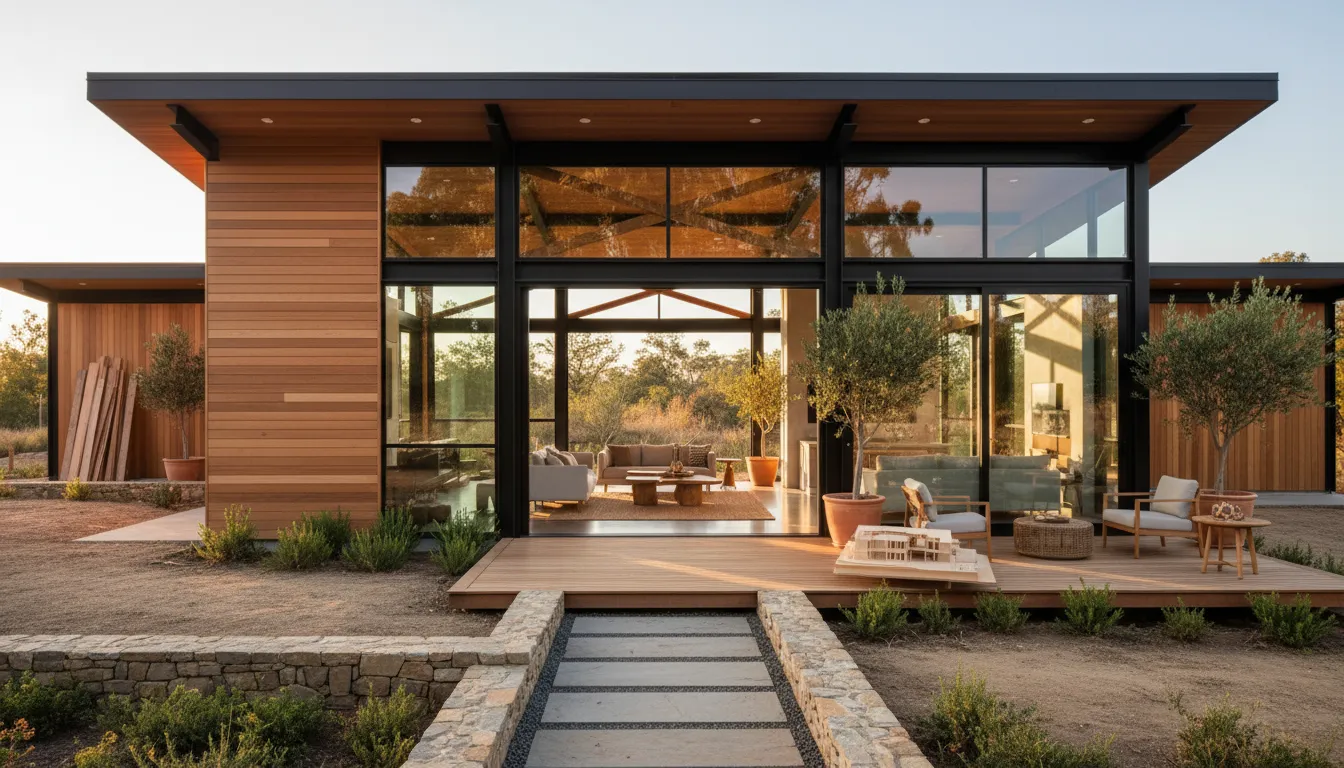
For three years I chased a single, stubborn vision: to build a home that feels like a long breath of relief, a place that reflects who I am and what I want to leave behind. I paid cash. No mortgage. No handouts. Just disciplined work, an online business, and the relentless focus to turn ideas into blueprints and blueprints into walls.
This is the story of how I took a blank piece of land and turned it into a handcrafted, intentional home. I’ll share the design principles that guided every decision, the practical steps that made construction possible, the rooms I love most and why, and the lessons I learned along the way—financial, emotional, and practical. Whether you want to build someday or are simply curious about what a purpose-built home looks like, you’ll find ideas you can use.
Design philosophy 🌿
Everything in the house was designed with intention. That doesn’t mean every surface is fancy or expensive. It means every choice—from the 25-foot ceilings at the entrance to the olive trees scattered inside and outside—was made to tell a story about resilience, rootedness, and long-term thinking.
The olive tree is a symbol of peace, resilience, and blessings. They are trees that are rooted deeply, they weather storms, and they produce fruit for generations.
I used the olive tree motif as a north star. Plants, textures, and light were selected to create a sense of calm and continuity. I wanted indoor spaces to feel like outdoor spaces and vice versa. Arches, large windows, courtyards, and carefully placed doors were all intentional moves to blur boundaries and invite nature in.
Design is not style alone. It’s functionality married to feeling. My house had to serve my life: content creation, hospitality, work, rest, and future family life. Every room needed to be beautiful and purposeful.
How I financed this in cash 💸
Paying cash changed how I planned. When you are not financing with a mortgage, budget discipline becomes absolute. For me that discipline came from building an online business and reinvesting revenue into this project over time. Three years is a long runway, and I used that runway to manage expenses, hire the right people, and avoid rushed decisions.
Here are the financial practices that made a cash build realistic:
- Plan with a clear target number. Know your total project budget before breaking ground and pad it with a contingency of at least 10 to 20 percent.
- Reinvest profits. Instead of spending income on short-term wants, I funneled business earnings into the build. Consistent reinvestment compounds results.
- Phase the work. Spread major expenses across seasons. When you build over several years, it’s easier to manage cash flow.
- Control scope creep. It’s tempting to add features mid-build. I prioritized needs over wants and saved upgrades for later where possible.
- Document everything for taxes and legal. Building a home has many tax and legal implications. I worked with professionals to keep records clean and compliant.
If you’re not building with cash right now, similar principles apply: set a target, budget conservatively, and avoid adding features that blow out the project without clear ROI.
From sketch to blueprint ✏️
I started with a hand-drawn sketch of the entire house. That sketch wasn’t fancy, but it captured the flow I wanted: tall, airy entryways, a courtyard at the center, rooms that open to the outdoors, and a clear separation between public and private spaces.
Next came a Pinterest board for visual references. I find that combining a rough sketch with curated imagery is the clearest way to communicate intent to an architect. The architect then translated the sketch and the mood board into a digital design, iterating until the footprint and elevations felt right. Those digital files became the official blueprint.
Design tips from this phase:
- Start rough, iterate often. Early sketches are cheap and fast. Use them to explore options before committing.
- Use visual references. A mood board clarifies tone, materials, and proportions better than words alone.
- Think about orientation. The sun’s path, wind, and views should inform window placement and room layout.
- Prioritize circulation. Sketch how people will move through the home; the best floor plans are invisible when they work well.
Choosing an architect and contractor 🛠️
An architect translates your ideas into buildable plans. A contractor turns those plans into reality. Both relationships are long-term and require trust.
When selecting an architect, I looked for someone who understood both aesthetic and practical building constraints. I needed an architect who could take my hand-drawn ideas and make them compliant with code, while preserving the soul of the design.
For the contractor, I prioritized experience with custom homes. Custom builds are different from tract homes—unexpected issues come up and the team needs to be adaptable. During construction, clear, frequent communication—weekly site visits, documented change orders, and a shared timeline—saved me from most headaches.
Practical advice:
- Ask for full portfolios and references. See completed homes and speak directly with past clients.
- Clarify roles early. Who manages permits? Who orders materials? Define responsibilities in writing.
- Establish a change-order process. This prevents scope creep and keeps budgeting transparent.
- Schedule regular walkthroughs. Being on-site prevents small errors from becoming big problems.
Key spaces I designed ❤️
I won’t walk you through every room. Instead, I’ll highlight spaces that taught me the most about balancing beauty and utility.
Arrival and the indoor courtyard
The moment you step in you notice the 25-foot ceilings and immediately feel the scale. From there, doors open into a courtyard. I didn’t want a typical foyer that funnels people into narrow hallways. I wanted a breath of space, a place that integrates indoor life with the outdoors.
Design choices that mattered:
- High ceilings to create generosity of scale
- Large openings to align interior sightlines with the courtyard
- Material continuity from inside to outside to blur the border
Waiting room
I call a specific sitting area my waiting room. It’s less about formal entry etiquette and more about having a space to pause—work, relax, or connect. Big windows frame both the front and back yards, providing constant interaction with the landscape.
Kitchen and the butler’s pantry
The kitchen is intentionally minimalistic. I wanted clean countertops, calm lines, and space for cooking and filming content. Adjacent to the main kitchen is a butler’s pantry with its own coffee bar and secondary prep area. I use that space for smoothies, juicing, and staging food for photos.
Why a butler’s pantry matters:
- Function. Keeps everyday clutter out of the main kitchen during gatherings and shoots.
- Flow. Allows multiple people to work without getting in each other’s way.
- Visual control. Hidden storage preserves clean lines in the main space.
Dining room and living area
I designed these spaces to feel communal. The dining area opens into the living room, and both look out to the courtyard. When friends or family come over, we can all be together without feeling cramped. This openness supports hospitality and also performs well for content creation, where natural light and sightlines matter.
Bathrooms inspired by travel
Each bathroom is an expression of a place I love. Instead of making a generic powder room, I used travel memories as inspiration:
- Japan-inspired bathroom. Minimal, calm, and precise. Subtle finishes and a focus on function.
- Greece/Tulum spa bathroom. White textures, natural stone, and indoor-outdoor flow that makes the space feel like a coastal hideaway.
- Dubai-inspired master bathroom. Luxe gold accents, white stone, and an elegant, opulent feel that contrasts with the quieter bathrooms elsewhere.
Designing each bathroom like a small travel vignette not only makes the home feel curated, but it also creates unique experiences throughout the day.
Office
My office is a favorite room. It has views to the outdoors and was designed for productivity and creativity. I included purposeful storage for content items, a layout that supports filming, and natural light to keep energy high during long workdays.
One key thing: I actually drew the house from scratch before bringing it to an architect. Having that original vision kept the final plan faithful to my priorities.
Master bedroom, balcony, and closet
The master suite was designed to be a restful retreat. The balcony overlooks the courtyard and backyard, creating a private outdoor room. The shower is huge, and the closet was built to hold the wardrobes I use for photos and videos so everything is at hand.
Practical points:
- Large shower for comfort and relaxation
- Closet organized for quick outfit changes during content production
- Balcony that connects private life to outdoor vistas
Blending indoor and outdoor living 🌞
Integration was a central goal. I wanted windows and doors to disappear. Courtyards, covered patios, and framed views make the outdoors feel like an extension of interior rooms.
Features that made integration successful:
- Floor-level continuity. Keeping floor materials visually aligned between inside and outside helps eliminate thresholds.
- Large glazed doors. Folding or sliding doors open wide to connect rooms to the courtyard and patio.
- Strategic planting. Using olive trees and Mediterranean plants both inside planters and outside creates continuity of palette and scent.
- Sun and shade planning. Overhangs and pergolas provide comfortable outdoor living at different times of day.
The courtyard: a centerpiece, not an afterthought 🏛️
The courtyard was custom designed and deserves its own attention. I hired a landscape architect specifically for this zone because a courtyard is more than plants and a pool; it’s the spatial heart of the home.
Goals for the courtyard:
- Create a Mediterranean vibe inspired by Greece
- Design multiple seating zones for lounging and entertaining
- Make the courtyard visible from many rooms to unify the overall layout
- Create a pool and water feature that feel like an oasis rather than a backyard afterthought
When you design a courtyard intentionally, it becomes a series of outdoor rooms. That level of detail changes how the entire home feels—more intimate, curated, and connected.
Materials, finishes, and sourcing ✨
Not everything had to be custom to feel custom. I sourced a surprising amount of decor and fixtures from accessible online sources and combined those with bespoke elements for the moments that matter.
Material decisions that shaped the tone:
- Neutral palettes. Whites, warm beiges, and soft greys create a calm canvas that lets texture and light do the heavy lifting.
- Natural stone and wood. These materials add warmth and tactile interest.
- Statement hardware. Gold accents in the master bath brought the luxe Dubai vibe without overdoing it.
- Durable, low-maintenance landscaping. Mediterranean plants and olive trees require less water and fit the aesthetic.
My approach was: splurge selectively and save where it won’t impact the long-term feel. High-traffic items and elements visible in photographs received more of the budget. Ancillary items were smart buys from broader marketplaces.
Everyday details that make life easier 🧰
After living in the house, the design decisions that offered the most return were often small:
- Butler’s pantry and coffee station. Having a dedicated area for food prep and coffee keeps the main kitchen tidy.
- Laundry with a view. Making an often-ignored room pleasant to be in changes how much you mind chores.
- Skincare drawer in the spa bathroom. Little touches like accessible storage make hosting simple and enjoyable.
- Closet organized for content creation. If you produce photos or videos, design your storage around quick access and organization.
Design that solves small friction points ends up being more valuable than flashy features that are rarely used.
Lessons learned building in my 20s 📚
Building a dream home at a young age taught me more about discipline, priorities, and the way money supports life than any other project I’ve taken on.
Key takeaways:
- Vision sustains you. A clear end-goal makes the long nights and tough calls worth it.
- Resilience matters more than perfection. Things go wrong. How you respond determines the final outcome.
- Design for the life you want, not the life you have. Think forward about children, hosting, remote work, and hobbies so the house grows with you.
- Community multiplies results. Even when the funding comes from your work, relationships with pros, tradespeople, and friends are invaluable.
Building early doesn’t mean you must rush. It means being intentional about priorities and being honest about what you can manage financially and emotionally.
Practical checklist for building a custom home 📝
Here is a condensed, practical checklist for anyone considering a custom build. Use it as a roadmap rather than a rigid plan.
- Define your why. What lifestyle are you building? What are the non-negotiables?
- Set a realistic budget and contingency. Aim for 10 to 20 percent contingency depending on project complexity.
- Buy the land. Consider orientation, views, access to utilities, and local zoning.
- Sketch and create a mood board. Combine function and aesthetic references to guide the architect.
- Hire an architect. Formalize the plan into a permit-ready blueprint.
- Secure permits. This can be a long step—start early.
- Bid and hire a contractor. Get multiple quotes and verify references.
- Set a construction schedule with milestones. Include foundations, framing, MEP, finishing, and landscaping.
- Order materials thoughtfully. Account for lead times for custom pieces.
- Conduct regular walkthroughs and maintain daily communication. Keep a log of decisions and change orders.
- Prepare for punch list items. Inspect thoroughly before final payments.
- Finalize landscaping and outdoor living. The yard matters as much as interior design for the final feel.
- Organize utilities and move-in logistics. Set up services, security, and maintenance plans.
Design lessons inspired by travel 🌍
Travel is the best design teacher. Each bathroom and several rooms in my house were inspired by places that left impressions on me. Translating travel into a home is less about copying and more about capturing mood.
How to borrow from places you love:
- Japan. Seek restraint and craft. Prioritize clean lines, functional storage, and materials that age gracefully.
- Greece/Tulum. Use whitewashed textures, soft stone, and natural fibers to create airy, tactile spaces.
- Dubai. Add a touch of drama—high-quality marble, warm metallics, and lighting that accents texture.
Designing rooms this way creates variety and narrative. Your home becomes a collection of memories rather than a single, flat aesthetic.
Managing the emotional roller coaster 🧭
Building a house is emotionally demanding. There are days of joy and days of frustration. The equilibrium that kept me steady came from sticking to routines and keeping long-term meaning in view.
Strategies that helped:
- Document progress. Photos and drawings remind you how far you’ve come.
- Keep a small ritual. For me, it was walking the site each week to imagine living there rather than monitor problems.
- Protect relationships. Expect friction with vendors and trades; handle it calmly and professionally.
- Celebrate milestones. Pour a cup of coffee or order takeout when a major stage completes. Those rituals keep morale high.
Maintenance and long-term care 🌱
Building is just the beginning. A home like this is an asset that requires routine care.
Maintenance basics to plan for:
- Seasonal landscaping care. Mediterranean plants are low maintenance but not no maintenance. Irrigation, pruning, and pest control matter.
- HVAC and mechanical checks. Annual service keeps systems efficient and reduces long-term costs.
- Exterior finishes. Sealing stone and checking weatherproofing extends longevity.
- Pool maintenance. Budget for chemicals, filtration, and seasonal shutting down if necessary.
What I would do differently
No project is perfect. If I could do parts of the build again, I would:
- Lock in lead times earlier for custom finishes to avoid last-minute substitutions.
- Design slightly more built-in storage in transitional spaces to minimize future clutter.
- Schedule longer lead times for landscaping so plants establish before key entertaining seasons.
Every regret was a learning opportunity. Those tweaks are minor compared with the joy of living in a home built with care.
Why symbolic choices matter
Design choices that reflect values—like the olive trees—make daily life feel richer. Symbolic elements turn architecture into a personal narrative. For me, those trees are a reminder that the project was rooted in patience, faith, and the intent to build something lasting.
Small symbolic choices also create coherence across interiors: a consistent palette, repeated materials, or a recurring motif can make a house feel unified without being monotonous.
Final thoughts and encouragement 🌟
Building a custom home is equal parts practical project and personal growth journey. It requires vision, financial discipline, and the willingness to navigate uncertainty. Done well, it rewards you with a space that supports your work, your rest, and your relationships for decades.
If you’re dreaming about building: start small. Sketch. Save. Learn from others. Your ideal home is a long-term project that grows with you. Stay rooted in the reasons you want it, make intentional trade-offs, and design for the life you hope to live—because that is what makes a house a home.
What you build today becomes the backdrop for the life you’ll live tomorrow. Make it meaningful, make it functional, and let it reflect the values you want to pass on.